CIES-Iscte has recently released, in open access, a new e-working paper by doctoral student Flávia Rodrigues Tristão Camello, examining the asymmetry of visibility across online platforms and its relationship with political radicalisation.
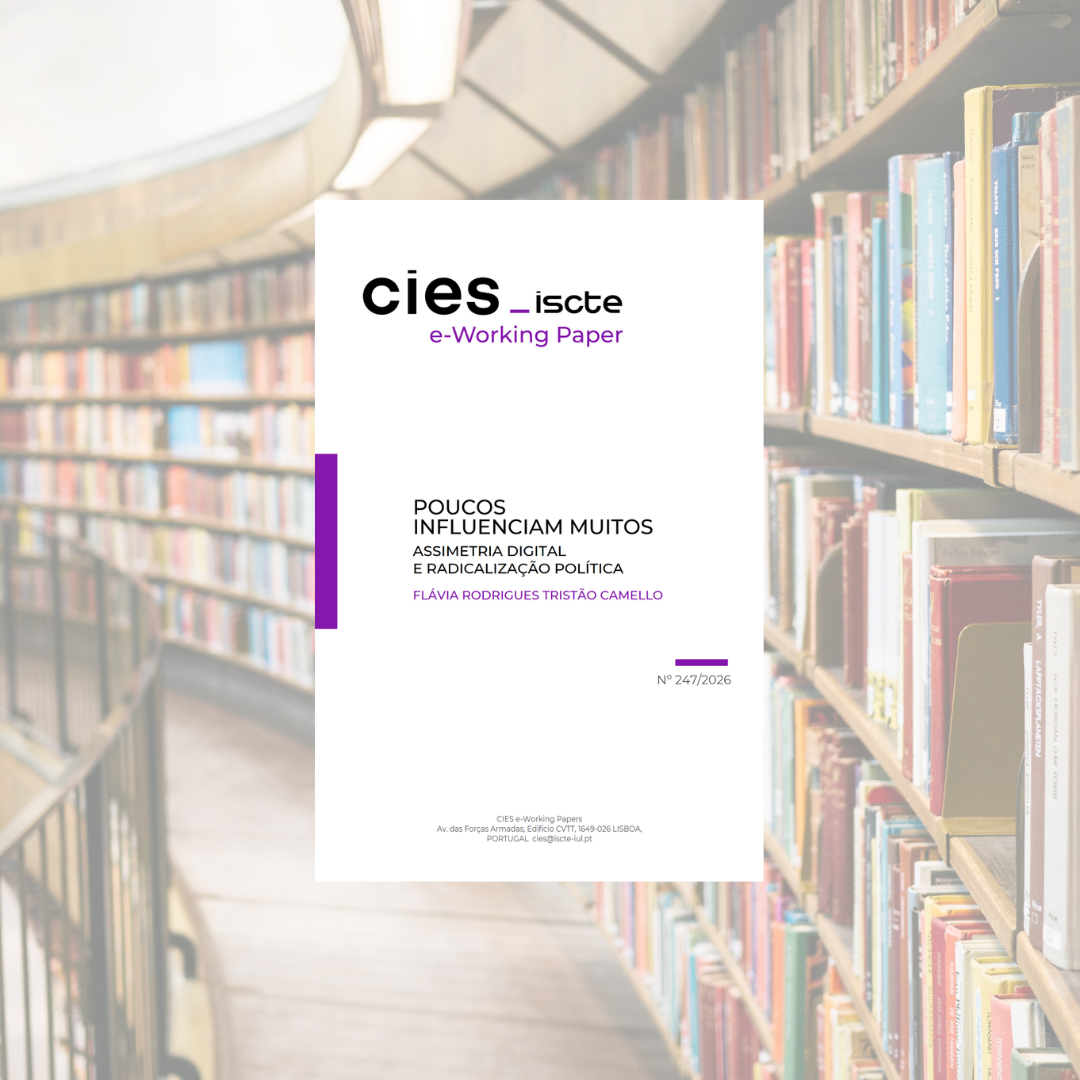
he article examines the emergence of digital elites - a small group of profiles with high centrality and strong content dissemination capacity - and their impact on patterns of visibility and engagement on online platforms. The study focuses on the Brazilian context, using X (Twitter) as a case study between the 2022 elections and the events of 8 January 2023.
Drawing on a mixed-methods approach that combines statistical indicators with qualitative analysis of narratives, the paper identifies a strong asymmetry of visibility. The findings show that a very small number of profiles concentrate the majority of interactions, reflecting a structural inequality typical of these networks and highlighting the role of algorithmic dynamics in amplifying content.
By emphasising the relationship between visibility, emotion and the circulation of information, the paper contributes to a better understanding of processes of political polarisation and radicalisation in digital environments.